
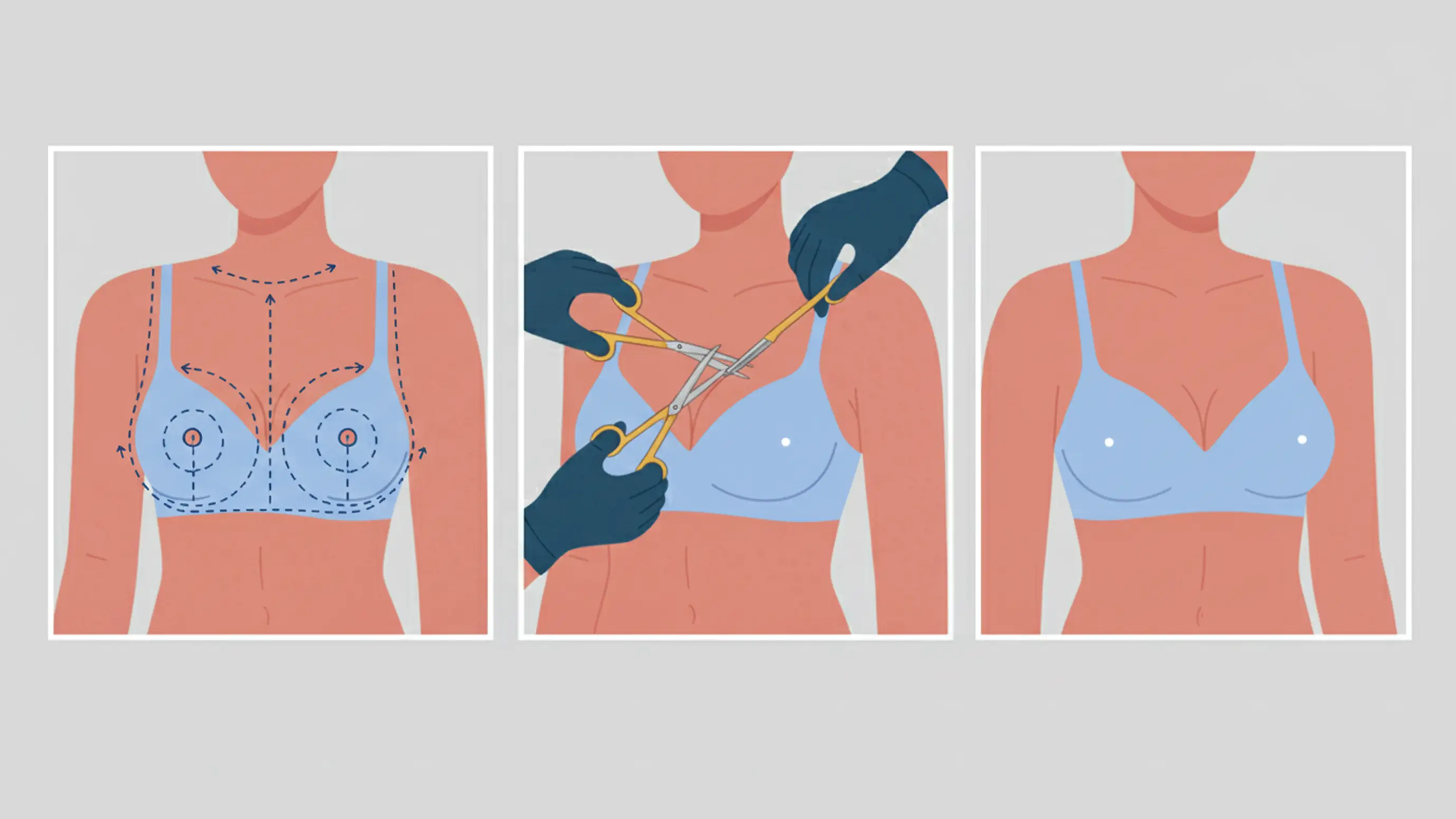
An anchor breast lift (also called inverted-T or Wise pattern mastopexy) is a surgical procedure that uses three incisions shaped like an anchor to lift severely sagging breasts, remove excess skin, and reposition the nipples to a higher, more youthful position.
This technique costs between $5,000 to $12,000, takes 2-3 hours to perform, and is the best option for women with significant breast drooping.
If your breasts sag significantly and other, less extensive breast lift options won’t give you the results you want, an anchor breast lift might be exactly what you need. This procedure creates the most dramatic transformation but also leaves more visible scars.
What Is an Anchor Breast Lift?
Anchor breast lift gets its name from the shape of the incisions made during surgery. When you look at the incision pattern, it resembles a ship’s anchor. This technique is also called an “inverted-T” lift because of how the scars form on your breast.
The anchor lift is the most thorough type of breast lift available. Surgeons use this method when breasts have dropped significantly and need major reshaping. While it creates more scars than other breast lift options, it also produces the most impressive results for women dealing with severe sagging.
Understanding the Three Incisions
The anchor technique involves three specific cuts:
- Around the areola: A circular incision goes around the darker skin surrounding your nipple. This allows the surgeon to reposition the nipple and areola higher on the breast.
- Vertical line: A straight cut runs down from the bottom of the areola to the breast crease. This is sometimes called the “lollipop” part of the incision.
- Horizontal line: A cut along the natural breast crease (the fold where your breast meets your chest wall). This incision is usually hidden in the crease and removes the most excess skin.
Together, these three incisions give your surgeon access to reshape your entire breast, remove large amounts of sagging skin, and create a lifted, more youthful breast shape.
Who Needs an Anchor Breast Lift?
Not everyone who wants a breast lift needs the anchor technique. Your surgeon will recommend this method based on how much your breasts sag and your specific goals.
| Good Candidates | Not Good Candidates |
| Severe breast sagging (nipples point downward or fall below breast crease) | Mild sagging (nipples still above breast crease) |
| Large amount of excess, stretched-out skin | Minimal extra skin |
| Very large or heavy breasts | Small to medium-sized breasts with minor sagging |
| Breasts that have lost volume after pregnancy or weight loss | People not finished having children |
| Overall good health and stable weight | Active smokers (increases complications) |
| Realistic expectations about scarring | Cannot accept visible scars |
| Want dramatic, long-lasting results | Unstable medical conditions |
Important to Know: If your breasts only sag a little bit, you might be better off with a less extensive procedure like a crescent lift or lollipop lift. These options create smaller scars. Your plastic surgeon will examine your breasts and recommend the best technique for your situation.
How Is the Surgery Performed?
Before Surgery
Your surgeon will meet with you to discuss your goals, take measurements, and draw markings on your chest showing where the incisions will be made. You’ll receive instructions about stopping certain medications, arranging for someone to drive you home, and not eating or drinking before surgery.
During the Procedure
The surgery typically takes 2-3 hours and follows these steps:
- Anesthesia: You’ll receive general anesthesia (you’ll be completely asleep) or IV sedation with local numbing medicine.
- Making incisions: The surgeon carefully makes the three incisions in the anchor pattern based on pre-surgery markings.
- Removing excess tissue: Extra skin and sometimes breast tissue get removed. If you have very large breasts, the surgeon might take out more tissue to reduce weight.
- Reshaping and lifting: The remaining breast tissue gets reshaped and lifted to a higher position on your chest.
- Repositioning the nipple: Your nipple and areola stay attached to blood vessels and nerves but get moved up to match your new breast shape.
- Closing incisions: The surgeon closes all incisions with sutures (stitches), and you might have drains placed to remove excess fluid.
After Surgery
You’ll wake up with bandages covering your breasts and possibly surgical drains. Most people go home the same day, though some might stay overnight in the hospital
Recovery Tips for Better Healing
- Take your pain medication as prescribed – don’t try to be tough
- Sleep on your back with pillows under your head and knees
- Wear your surgical bra 24/7 for the first few weeks
- Don’t lift anything heavier than a gallon of milk for 4-6 weeks
- Avoid raising your arms above your shoulders during the first two weeks
- Don’t smoke – it slows healing and increases complications
- Stay hydrated and eat protein-rich foods to support healing
- Keep all follow-up appointments with your surgeon
- Be patient – final results take several months to appear
Understanding the Scars
Let’s be honest: anchor breast lifts create noticeable scars. This is the trade-off for achieving dramatic lifting results. However, understanding what to expect about scarring can help you prepare mentally and take steps to minimize their appearance.
What the Scars Look Like
You’ll have three scars that form an anchor or inverted-T shape on each breast:
- Around your areola: This scar usually heals well and blends in with the edge where darker and lighter skin meet.
- Vertical scar: Runs straight down the middle front of your breast. This is usually the most visible scar, especially if you wear low-cut tops.
- Horizontal scar: Hidden in your breast crease. When you’re standing up, this scar is often hidden by the natural fold of your breast.
How Scars Change Over Time
| Time After Surgery | Scar Appearance |
| Weeks 1- 6 | Red, raised, and very noticeable. May look worse before they look better |
| Months 3-6 | Starting to fade from bright red to pink. Flattening out. |
| Months 6-12 | Continuing to fade. Becoming thinner and softer. |
| 1-2 Years | Final appearance. Usually faded to light pink or white lines. |
Minimizing Scar Visibility
- Follow all wound care instructions exactly as your surgeon directs
- Use silicone scar sheets or gel as recommended (usually after 2-3 weeks)
- Protect scars from sun exposure for at least a year (use SPF 30+ sunscreen)
- Don’t smoke – smoking makes scars worse
- Massage scars gently once healed (your surgeon will tell you when)
- Consider scar treatment options like laser therapy after 6 months if needed
- Be patient – scars take 1-2 years to fully mature
How Much Does An Anchor Breast Lift Cost
Anchor breast lifts cost more than less extensive breast lift options because the surgery takes longer and requires more work. Here’s what you can expect to pay:
| Cost Component | Average Price Range |
| Surgeon’s Fee | $4,000 – $8,000 |
| Anesthesia Fee | $600 – $1,200 |
| Operating Room/Facility Fee | $800 – $2,000 |
| Medical Tests (blood work, mammogram) | $200 – $500 |
| Surgical Garments and Supplies | $100 – $300 |
| Medications (pain pills, antibiotics) | $50 – $150 |
| Total Average Cost | $5,750 – $12,150 |
Factors That Affect Price
- Location: Procedures in big cities like New York or Los Angeles cost more than in smaller towns
- Surgeon experience: Highly experienced, board-certified surgeons charge more
- How much work is needed: More severe sagging requires more time and skill
- Combined procedures: Adding implants or liposuction increases the total cost
- Hospital vs. office: Surgery centers often cost less than hospitals
Insurance note: Most insurance companies don’t cover breast lifts because they’re cosmetic. However, if you’re also getting a breast reduction for medical reasons (back pain, skin rashes), insurance might cover part of it. Many plastic surgery practices offer payment plans to make the procedure more affordable.
Anchor Lift vs. Other Breast Lift Options
Several breast lift techniques exist, and each one works best for different amounts of sagging. Here’s how they compare:
| Technique | Best For | Incision Patterns | Scarring | Lifting Power |
| Crescent Lift | Very minimal sagging | Half-circle above areola | Minimal (hidden at areola edge) | Minimal lift |
| Donut Lift | Mild sagging | Circle around areola | Moderate (around areola) | Small to moderate lift |
| Lollipop Lift | Moderate sagging | Around areola + vertical line down | Moderate (visible vertical line) | Good lift |
| Anchor Lift | Severe sagging | Around areola + vertical + horizontal | Most visible (three scars) | Maximum lift |
Why Choose Anchor Breast Lift Over Other Methods?
You should consider the anchor technique if:
- Your nipples point downward or sit well below your breast crease
- You have a lot of excess, saggy skin
- Your breasts are very large and heavy
- You want the most dramatic, long-lasting results
- You’re willing to accept more visible scars for better lifting
- Other lift options won’t give you the improvement you want
Combining Anchor Lift with Other Procedures
Many women combine their anchor breast lift with other surgeries to get complete results:
Anchor Lift + Breast Implants
If your breasts have lost volume and also sag, you might want both lifting and size increase. The surgeon can place implants during the same surgery to add fullness to your lifted breasts.
Anchor Lift + Breast Reduction
If you have very large, heavy breasts that sag, the anchor technique allows the surgeon to both lift and reduce size at the same time. This addresses sagging while also relieving back pain and other symptoms of overly large breasts.
Anchor Lift + Liposuction
Some women have fat under their arms or on their sides that they want removed at the same time. Adding liposuction to nearby areas can improve your overall chest contour.
Final Thoughts
Anchor breast lift is a serious surgical procedure that creates dramatic, life-changing results for women dealing with severe breast sagging. While it requires the most extensive incisions and creates the most noticeable scars among breast lift options, it also provides the most powerful lifting and reshaping.
This procedure isn’t for everyone. If you have mild to moderate sagging, you might be better suited for a less extensive lift that creates smaller scars. But if your breasts have dropped significantly and you want a major transformation, the anchor technique is likely your best choice.
Medical Disclaimer: This article provides general information about anchor breast lift surgery and is not medical advice. Every person’s body is different, and results vary. Always consult with a qualified, board-certified plastic surgeon to discuss your specific situation, goals, and whether you’re a good candidate for this procedure. Only a qualified surgeon can provide personalized medical advice and recommendations after examining you in person.
Sources and References
- DMR Aesthetics. (2024). “What Is an Anchor Breast Lift?”
- American Board of Cosmetic Surgery. (2024). “Breast Lift Surgery Guide.”
- Cleveland Clinic. (2022). “Breast Lift (Mastopexy): Surgery & Recovery.”

We’re a team dedicated to providing clear, trusted, and easy-to-understand advice on breast lift procedures. From costs and recovery to risks and real experiences, our goal is to give you everything you need to make confident, informed decisions about your journey.