
Lollipop breast lift (also called a vertical breast lift) is a surgical procedure that uses two incisions, one around the areola and one straight down to the breast crease, creating a lollipop-shaped scar pattern that lifts and reshapes moderately sagging breasts with less scarring than traditional methods.
If your breasts have lost their youthful shape and perkiness, you’ve probably looked into breast lift options. Among all the techniques surgeons use, the lollipop breast lift has become one of the most popular choices. But what exactly is it, and how is it different from other breast lifts?
Let’s break down everything you need to know about this procedure in plain language.
Understanding Lollipop Breast Lift
The name “lollipop” might sound silly, but it actually describes exactly what the surgical cuts look like. Imagine drawing a lollipop on your breast: there’s a circle around the candy part (your areola) and a stick going down from it. That’s the pattern surgeons follow when making incisions for this type of breast lift.
Here’s what happens during the procedure:
- The surgeon makes a circular cut around the edge of your areola (the darker skin around your nipple)
- Then they make a straight vertical cut from the bottom of your areola down to the crease where your breast meets your chest
- Through these incisions, they remove excess skin, reshape your breast tissue, and move your nipple up to a higher, more youthful position
- Finally, they close everything up, creating a scar that looks like a lollipop shape
The entire surgery usually takes about 2-3 hours, and you’ll be under general anesthesia, which means you’re completely asleep and won’t feel anything.
Why It’s Called “Vertical” Lift Too
You might hear doctors call this a “vertical breast lift” as well. That’s because the main feature of this technique is the vertical incision running down the breast. This vertical cut is what sets it apart from simpler lifts that only go around the areola.
How Does It Compare to Other Breast Lifts?
There are actually several types of breast lifts, and each one works best for different levels of sagging. Let’s look at how the lollipop lift stacks up:
| Type of Lift | Incision Pattern | Best for | Scarring |
| Crescent Lift | Small half-moon cut at top of areola | Very minimal sagging (usually with implants) | Minimal – nearly invisible |
| Donut Lift | Circle around areola only | Mild sagging | One circular scar around areola |
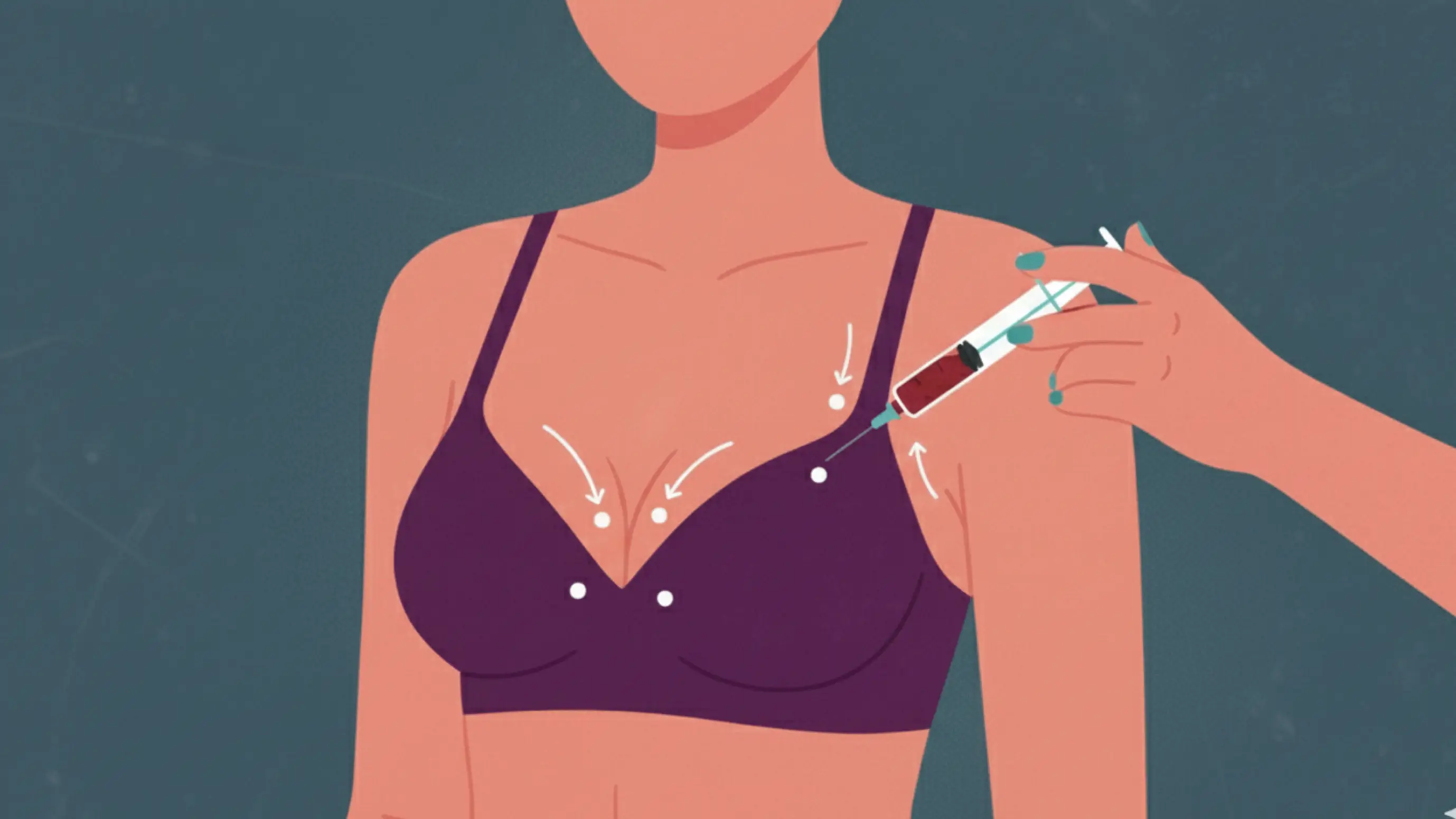
| Vampire Breast Lift | No actual lift (improves skin texture) | Subtle enhancement, no sagging correction | No scars (injection only) |
| Anchor Lift | Circle + vertical line + horizontal line in breast crease | Severe sagging or very large breasts | Most extensive scarring |
Think of it this way: the lollipop lift sits right in the middle. It’s more than a simple lift around the areola, but less extensive than the full anchor lift. This makes it perfect for women who have moderate sagging—not too little, not too much.
Who Is a Good Candidate?
Not everyone needs or should get a lollipop breast lift. This procedure works best if you fit certain criteria:
You’re Probably a Good Candidate If:
- Your nipples point downward or sit at or below your breast crease
- Your breasts have a moderate amount of sagging (ptosis)
- You’ve lost breast volume after pregnancy, breastfeeding, or weight loss
- Your breast skin has good elasticity (it bounces back when you pinch it)
- You’re finished having children (or willing to accept that future pregnancies may affect results)
- You’re at a stable, healthy weight
- You don’t smoke, or you’re willing to quit
You Might NOT Be a Good Candidate If:
- You have only mild sagging (a donut lift would work better)
- You have severe sagging with very large breasts (an anchor lift would be more effective)
- You’re planning to get pregnant soon
- You have unrealistic expectations about results
- You have certain medical conditions that make surgery risky
Quick Test: Stand in front of a mirror without a bra and hold a pencil horizontally under your breast where it meets your chest. If your nipple sits below the pencil, you likely have enough sagging for a breast lift. The exact type of lift you need depends on how far below the pencil your nipple falls.
The Procedure: What to Expect Step by Step
Before Surgery
You’ll meet with your plastic surgeon several times before the actual procedure. During these visits, the surgeon will:
- Examine your breasts and measure their current shape and position
- Take photos for your medical records
- Discuss your goals and what you hope to achieve
- Explain exactly how they’ll perform your specific surgery
- Go over all risks and answer your questions
You’ll also need to get some medical tests done, possibly including a mammogram. Your surgeon will give you instructions about stopping certain medications, quitting smoking, and arranging for someone to drive you home after surgery.
During Surgery
On the day of your procedure, here’s what happens:
- You’ll be put under general anesthesia so you’re completely asleep
- The surgeon marks the incision lines on your breasts
- They make the lollipop-shaped incisions
- Excess skin is removed
- The underlying breast tissue is reshaped and lifted
- Your nipple and areola are moved to a higher, more forward position
- If needed, the size of your areola can be reduced
- The incisions are closed with stitches, surgical tape, or skin glue
- Your breasts are wrapped in gauze and placed in a surgical bra
Right After Surgery
Once you wake up, you’ll spend some time in recovery before going home the same day. You’ll feel groggy from the anesthesia, and your chest will feel tight and sore. Your breasts will be swollen and bruised, and you might have small drainage tubes to remove excess fluid.
Recovery Timeline
Recovery is different for everyone, but here’s a general timeline most patients follow:
| Time Period | What You’ll Experience | What You Can Do |
| Days 1 – 3 | Most pain and discomfort; significant swelling and bruising; very tired | Rest in bed; walk around house gently; take prescribed pain medication |
| Days 4 – 7 | Pain decreasing; still swollen; drainage tubes removed (if you had them) | Light household activities; short walks outside; switch to over-the-counter pain relief |
| Week 2 | Much less pain; bruising fading; stitches might be removed | Return to desk job; drive if off pain medication; still no heavy lifting |
| Week 3 – 4 | Swelling going down; starting to see your new shape | Light exercise like walking; most normal activities |
| Weeks 6 – 8 | Most swelling gone; scars still red but flattening | Resume full exercise including running, lifting; wear underwire bras again |
| 3 – 6 Months | Final shape settling in; scars fading to pink | All activities; breasts feel more natural |
| 1 – 2 Years | Scars fade to white or light pink; final results visible | Everything back to normal |
Important Recovery Tips
- Sleep on your back: Use lots of pillows to prop yourself up. No side or stomach sleeping for at least 4-6 weeks.
- Wear your surgical bra: Don’t take it off except to shower (when your surgeon says it’s okay). This supports healing.
- Keep your arms down: No reaching up high or lifting anything heavier than a gallon of milk for the first few weeks.
- Skip the gym: Your chest needs time to heal. Doing too much too soon can cause complications.
- Follow scar care instructions: Your surgeon will tell you when to start using silicone gel or tape to help scars fade faster.
How Much Does Lollipop Breast Lift Cost?
Let’s talk money. Lollipop breast lift isn’t cheap, and unfortunately, insurance won’t cover it since it’s considered cosmetic surgery.
The average cost in the United States runs between $5,000 and $12,000. However, this can vary a lot depending on:
- Where you live: Major cities like New York or Los Angeles cost more than smaller towns
- Your surgeon’s experience: More experienced, board-certified surgeons charge higher fees
- The surgical facility: Hospital operating rooms cost more than outpatient surgery centers
- Anesthesia fees: The anesthesiologist charges separately
- Additional costs: Prescriptions, surgical bras, follow-up visits
Cost Breakdown Example: The total price typically includes: surgeon’s fee ($4,000-$8,000), anesthesia ($800-$1,200), facility fee ($800-$2,000), medical tests ($200-$500), surgical garments and supplies ($100-$300).
Many plastic surgery practices offer payment plans or work with medical financing companies like CareCredit to help you afford the procedure. Just remember: never choose a surgeon based on price alone. This is your body, you want the best, not the cheapest.
What Results Can You Really Expect?
Let’s set realistic expectations. A lollipop breast lift will:
- Raise your breasts to a higher, perkier position
- Improve breast shape and contour
- Move your nipples to point forward instead of downward
- Make your breasts look fuller and rounder
- Potentially reduce areola size
- Make bras and swimsuits fit better
- Boost your confidence and self-image
However, a breast lift will NOT:
- Significantly change your breast size (you won’t go up or down cup sizes)
- Add upper pole fullness (you might need implants for that)
- Last forever without any changes (gravity and aging continue)
- Make your breasts completely identical (perfect symmetry is impossible)
- Eliminate all sagging permanently (especially if you gain/lose weight or get pregnant)
How Long Do a Lollipop Breast Lift Results Last?
Most women enjoy their breast lift results for 10-15 years before considering another lift. However, this depends heavily on:
- Your age at the time of surgery (younger skin holds up better longer)
- Breast size (larger breasts sag faster due to gravity)
- Weight stability (big fluctuations affect results)
- Pregnancy and breastfeeding after surgery
- Genetics and skin quality
- Sun exposure and skincare
Medical Disclaimer: This article provides general information about lollipop breast lift surgery and should not be considered medical advice. Every person’s situation is unique, and only a qualified, board-certified plastic surgeon can properly evaluate whether you’re a good candidate for this procedure. Always consult with a licensed medical professional before making any decisions about surgery. The information here is for educational purposes only and does not replace a professional medical consultation.
Bottom Line:
Lollipop breast lift is an excellent option for women dealing with moderate breast sagging. It offers more correction than simpler techniques while creating less scarring than the full anchor lift. The results can be beautiful and long-lasting, giving you perkier, more youthful-looking breasts.
However, it’s still major surgery with real risks, a recovery period, and permanent scars. Make sure you choose a qualified surgeon, have realistic expectations, and are prepared for the commitment of recovery.
Sources and References
- American Board of Cosmetic Surgery. (2024). “Breast Lift Surgery Guide.”
- Mayo Clinic. (2022). “Breast lift.“
- Wellesley Cosmetic Surgery. (2024). “The Lollipop Lift vs. The Anchor Lift.”

We’re a team dedicated to providing clear, trusted, and easy-to-understand advice on breast lift procedures. From costs and recovery to risks and real experiences, our goal is to give you everything you need to make confident, informed decisions about your journey.